Complexity Isn’t the Exception—It’s the Operating Model
For public sector organizations, multi-site security operations rarely exist in a single location.
They span:
Multiple facilities
Multiple jurisdictions
Multiple systems—often deployed at different times, for different needs
What starts as a necessary expansion—new sites, new infrastructure, new stakeholders—gradually creates something harder to manage:
A network of operations that function independently, but are expected to perform as one.
On paper, each site may be operating effectively.
But across the system, coordination becomes the challenge.
The Hidden Problem in Multi-Site Environments
When issues arise, they’re often attributed to scale.
Too many locations.
Too many systems.
Too many variables to control.
But scale isn’t what breaks operations.
Lack of alignment does.
Because in many environments, each site evolves its own way of operating:
Different processes
Different workflows
Different interpretations of what “response” looks like
Individually, these decisions make sense.
Collectively, they create inconsistency.
And inconsistency is where risk begins to surface.
Where Multi-Site Operations Start to Break Down
The challenge isn’t visibility at a single site.
It’s maintaining clarity across all of them—at the same time.
Visibility Without Context
Most organizations can see what’s happening at each location.
Alarms are triggered.
Events are logged.
Systems are monitored.
But visibility alone doesn’t create control.
Because without shared context and enterprise-wide situational awareness, it’s difficult to answer:
What matters most right now?
Which events require escalation?
How does this incident compare to others across the network?
Each site may have the information it needs locally.
But leadership often lacks a centralized security management view of what’s happening system-wide.
Standardization That Doesn’t Scale
In theory, processes are standardized.
In practice, they adapt.
Local teams adjust workflows to fit their environment.
Operators develop their own ways of handling recurring scenarios.
Over time, those adjustments compound.
So while procedures may exist centrally, execution varies by site.
Which leads to:
Inconsistent response times
Different escalation paths
Uneven levels of risk management
Not because teams are underperforming—
But because consistency becomes harder to enforce as complexity grows.
Fragmented Systems, Fragmented Decisions
Many public sector environments rely on a mix of legacy and modern systems.
Each serves a purpose.
Each holds part of the picture.
But rarely are they fully unified.
This is a common challenge when security system integration has evolved over time. Access control, video surveillance, alarm monitoring, and other critical technologies often operate independently, creating information silos.
So when an event occurs, operators often have to:
Navigate multiple systems
Piece together information
Interpret data across sources
All before making a decision.
And across multiple sites, that fragmentation multiplies.
Not just in systems—
But in how decisions are made.
The Operational Gap That Emerges
Over time, these challenges create a subtle but critical gap.
Each site is operating.
But the system as a whole isn’t fully coordinated.
Leadership sees activity—but not always alignment.
Operators respond—but not always consistently.
And when incidents span locations—or require coordinated response—the gaps become visible.
Not as system failures.
But as moments where the organization doesn’t act as a single unit.
Why This Problem Is Getting Harder
Public sector environments are evolving quickly:
Infrastructure is expanding
Security requirements are increasing
Compliance expectations are tightening
Critical infrastructure security concerns are growing
At the same time, many organizations are still working within:
Disparate systems
Decentralized processes
Limited cross-site visibility
The result is an environment where complexity grows faster than coordination.
A More Practical Way to Approach Multi-Site Operations
Leading organizations don’t try to eliminate complexity.
They focus on managing it with structure.
They prioritize three things:
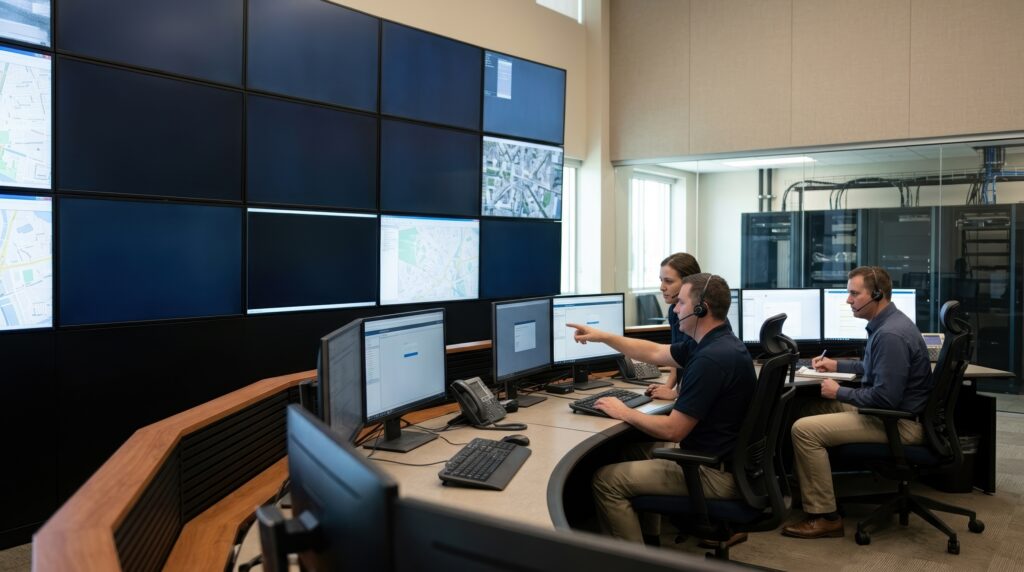
Shared Visibility
Not just seeing what’s happening at each site—
But understanding it within the context of the entire operation.
A unified view that connects events, priorities, and risk across locations through real-time monitoring, operational intelligence, and improved situational awareness.
Consistent Workflows
Not rigid processes, but aligned ones.
Where response protocols are clearly defined, consistently applied, and adaptable to different scenarios—without relying on individual interpretation.
Operational Alignment
Ensuring that decisions made at the site level reflect system-wide priorities.
So whether an incident happens at one location or across many, the response is coordinated, not isolated.
Effective coordinated incident response depends on maintaining alignment across facilities, departments, and stakeholders.
This is where many traditional approaches fall short.
They focus on managing individual systems or locations.
But multi-site environments require something different:
A way to operate as a single, coordinated system—despite underlying complexity.
SIS provides that foundation.
By integrating legacy and modern systems into a unified security platform, it connects:
Events across locations
Operators across teams
Processes across environments
So organizations can move from fragmented visibility to coordinated control.
It enables:
A centralized view of multi-site security operations
Standardized workflows applied consistently across locations
Faster, more aligned decision-making in critical moments
Enhanced situational awareness across the enterprise
Centralized command and control for complex public sector environments
Not by replacing existing infrastructure, but by bringing it together in a way that makes it manageable.
Managing multi-site security operations isn’t just a question of scale. It’s a question of coordination.
Because the challenge isn’t whether each site can operate effectively on its own. It’s whether all sites can operate effectively together. And in complex public sector environments, that difference defines the outcome.
If managing multiple sites feels more complex than it should, it may not be the number of locations creating the challenge. It may be how those locations are connected.
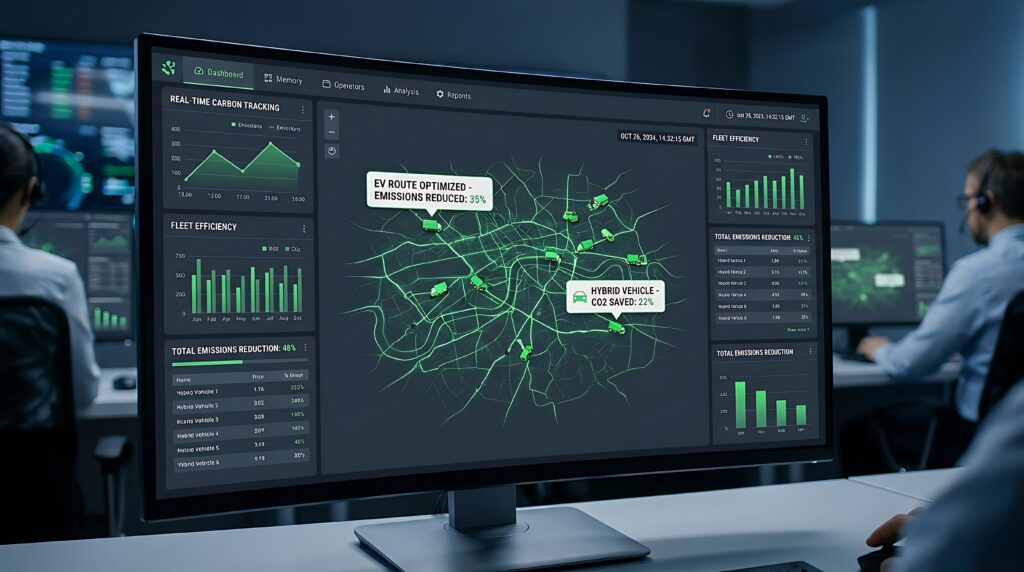
We can help you bring structure, visibility, and alignment to your operations—so your entire system works as one.
Choose SIS Alarm Center, and see how we can help you combat threats both inside and outside your organization.